
AI in Agriculture: The Japan AgriTech Experience
By: Mclean Bayasca
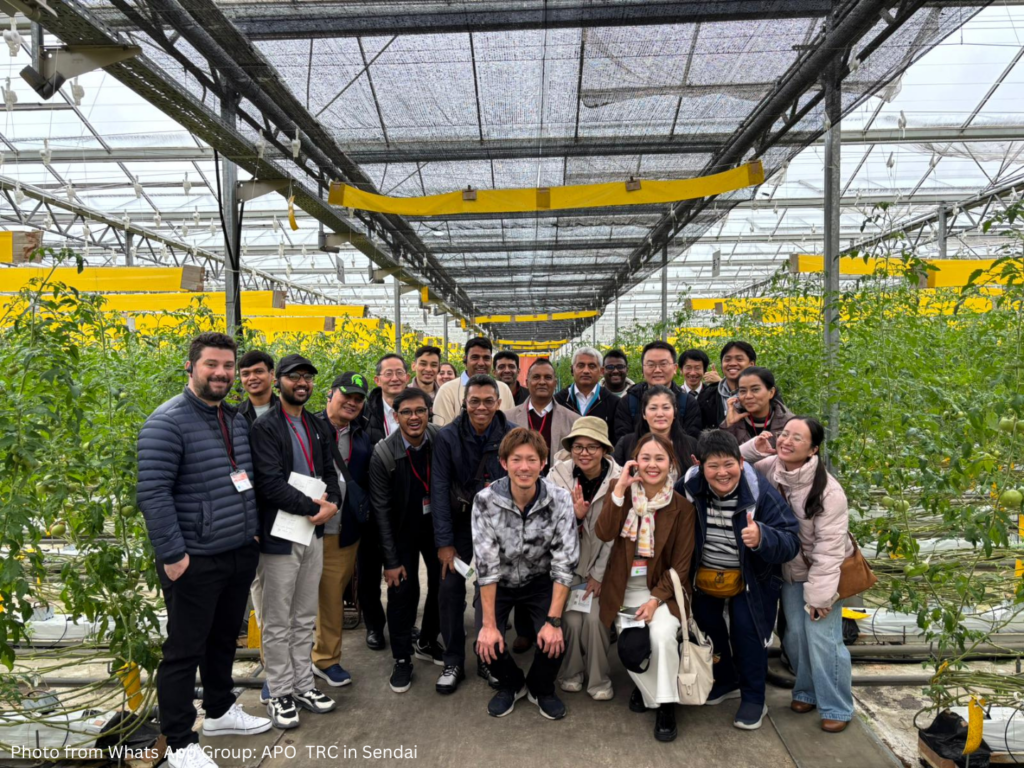
From March 23-27, 2026, I was given a chance to visit Sendai, Japan for the APO Training Course on AI in Agriculture. I was one of only two Filipino representatives and the youngest of 22 participants from 14 different asian countries. The training highlighted the immense benefits of adopting Artificial Intelligence (AI) in our respective agricultural sectors, focusing on real-world use cases, application of AI in different aspects, data collection, open-source technologies, and possible solutions to current problems.
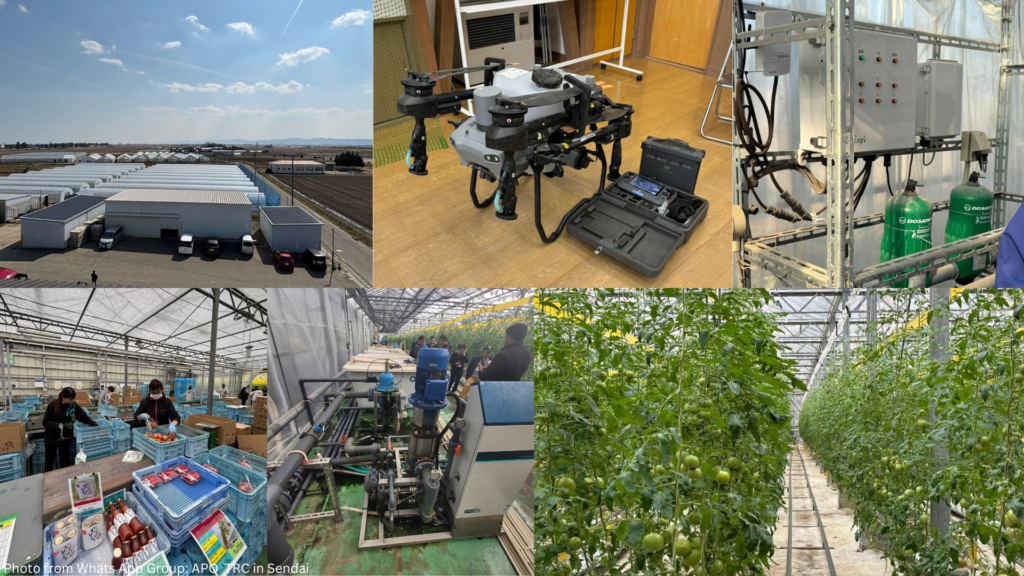
Our itinerary included visits to three farming communities that leverage precision agriculture—the process of using sensor-based data to customize interventions such as irrigation, fertilization, and shading. Our first visit was at the Tamaurananbu-Seisankumiai, an agricultural cooperative, in Iwanuma City, Miyagi Prefecture. The cooperative uses Zero.Agri, an AI powered irrigation and fertilization system that correlates sensor data with online weather forecasts for precise farming interventions. Our second visit was at the Omokawa Farm, which was managed and owned by
Mr. Omokawa, in Kakuda City, Miyagi Prefecture. He manages his farms by using drones that are connected to a digital platform called Xarvio, a software that analyzes satellite imagery, weather, and soil data to help create data-driven decisions. Our last visit was at the Sunfresh Matsushima in Matsushima-cho, Miyagi Prefecture. Their greenhouses use a Dutch-style hydroponic technology that also uses Priva, an automated system for greenhouse management. The head farmer told us that the system uses thresholds in triggering its automations and that for now, he does not see any need to integrate AI in their greenhouse management.
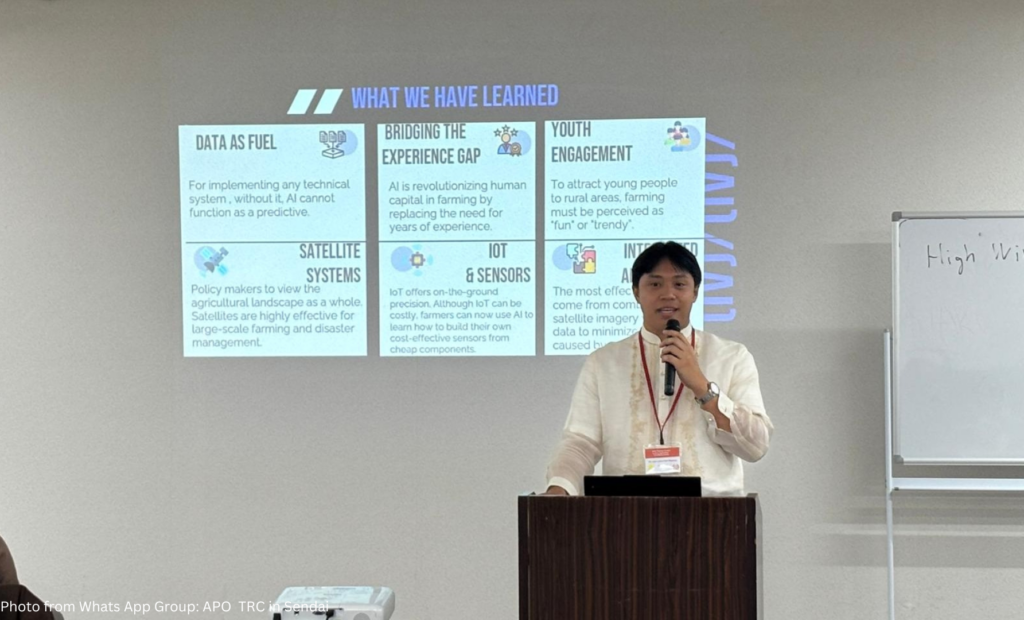
The training made it clear that AI is not just for automation; it is an assistive agent that can predict problems, create solutions, identify situations and refine current frameworks. But before using AI, you need data and with more data, AI can create better solutions, insights and outputs. Paring precision agriculture with AI can make farming faster, better, and more precise leading to higher yields, better product quality and less waste.
The sessions and discussions we had showcased that the rapid advancement of technology will always be a constant in our modern world. Countries are currently shifting from industry 4.0 to industry 5.0. This does not necessarily mean that countries have fully adopted automation but rather that they are moving towards human-centered technology
advancement. Instead of humans adjusting to technology, it should be technology advancements adjusting to human conditions. Humans should be leading technology and not simply adjusting to technology.
The use of AI in agriculture will be inevitable in the future but we do not need to rush. The main agenda for the Philippines right now is to focus on solving the digital divide and helping farmers prepare for the upcoming agricultural future with sensors, data, automation and AI. As the nationwide connectivity improves, we should open the minds of our farmers to modern farming technologies and help them prepare for what is to come instead of forcing adoption when the technology arrives.
This aligns with what we are doing right now as Varacco. Varacco’s Smart FARM project aims to capacitate indigenous farmers to become farmer scientists by establishing IoT-enabled nurseries where farmers are trained, through the Farmer Scientist Training Program (FSTP), on topics like IoT familiarization, nursery management, horticultural management, and more.
What makes Japan a good reference for AI technology adoption in the Agricultural Sector?
With this visit, I realized that though Japan is more technologically advanced than the Philippines, I can see that we are not very far behind when it comes to agricultural technological advancements. What differs Japan from other countries is the implementation and integration of technology onto its sectors. With the Japan Agricultural Cooperative (JA) earning the trust of most farmers in the country, together with government provided subsidies, farmers, both old and young, are encouraged to use modern farming technologies to secure food security for the country. Gaining the trust of the community is essential in implementing progressive tools and instilling a sustainable mindset to a community of farmers. With this encouragement, more farmers are using technology in their farms hence creating more use cases which other farmers can refer to.
But problems still remain, problems that are shared by most Asian countries, mainly; aging farmers, fragmented lands, costly technologies, technology hesitant aging farmers and farming hesitant younger generation. Most farmers also have limited formal education making technology adoption and interpretation a major issue.
In Japan, aging farmers opt to rent their lands to other farmers as their kids do not want to pursue farming. With more aging farmers leaving their lands, the remaining farmers and new farmers have more lands that they can rent or own wherein they can use large-scale agricultural technologies. Adopting these modern farming technologies are costly but with more farming lands means more income and through large subsidies given by the government and the support of JA, the remaining old and new farmers have more reasons to adopt these technologies. With new technologies and more opportunities, the tech-savvy younger generation has started to take interest in farming as well.
AI is used for correcting spellings, punctuations and gramatical errors only.